
Raihan Khan shipped ColdVisit alone for under fifty dollars. Then came the hard part.
It was six in the evening in Girona and half past nine at night in India, which he told me was early for him. He usually works until three in the morning.
I found Raihan Khan because of a keyword. I bought a tool called BizReply on a lifetime-deal site a while back (which will stay nameless, since we are beefing) and it has more than earned its keep. It sits on top of my LinkedIn and runs saved searches for phrases I care about. “We just launched.” “YC26.” “Product Hunt.” It surfaces posts from people I don’t already follow, which is the only reason I use it. One of the posts it surfaced was Raihan taking a website apart in public. I clicked, bought his product, and ran an audit on a client’s site.
The run failed. (Perhaps my own human error, or an error with the client site.) But yes, failed.
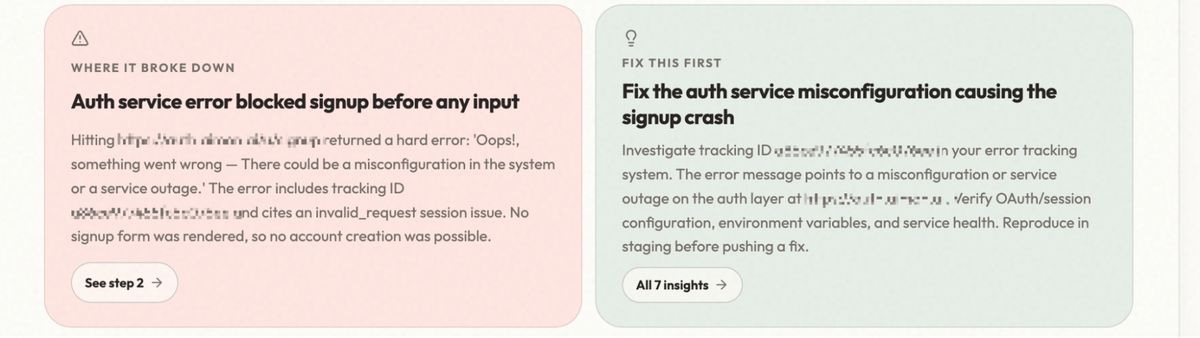
It was five in the morning where he was. He woke up to the error in his logs, reproduced it locally, emailed me, ran the audit himself on my behalf, and had the finished report waiting on my dashboard before I had finished my coffee. He apologized twice on our call for something that cost me next to nothing. For what it’s worth, his rerun worked, and taught me that there was a real issue with the sign up flow for a new customer. I took this back to my client to investigate.
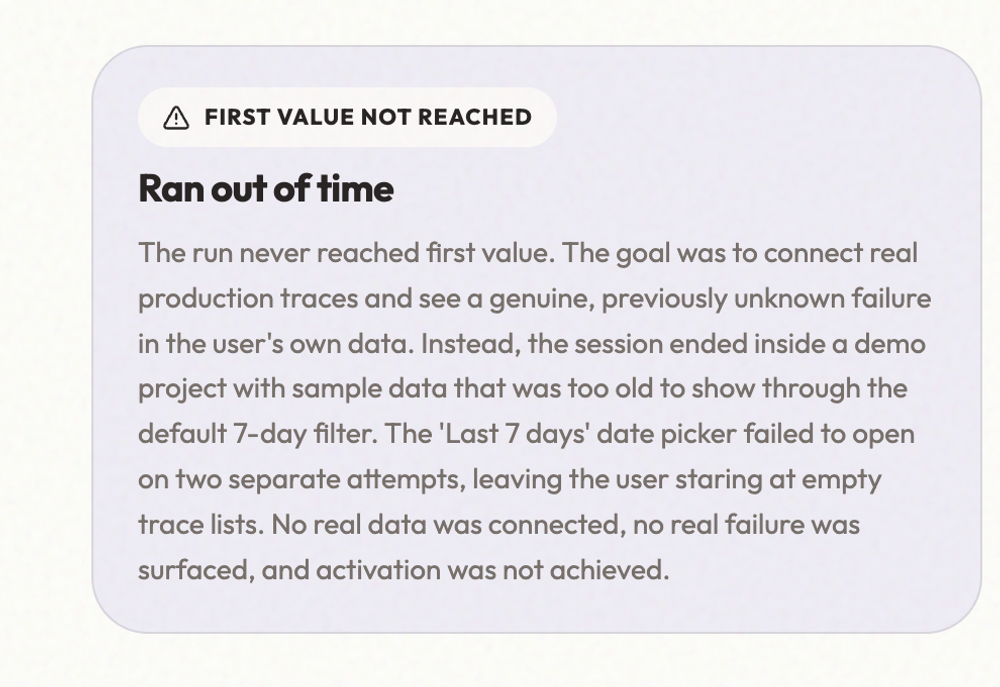
That tells you most of what you need to know about him. Here is the rest. ColdVisit is about six weeks old. He built it alone. In a day. And he is living the exact problem his product was built to diagnose, which is that he has something that works and cannot yet get enough people to try it.
I talk to founders in that position every week now. They built the thing. Nobody warned them about what comes after. Most are solo, most are unfunded, and all of them are working out distribution in public with no playbook. I want those conversations written down, so this is the first.
“The moat right now is distribution”
Raihan is an applied AI engineer. He has spent about three years with a UK based fintech backed by some of the top banks of Europe, and before that worked with Polygon, HSBC, AWS, and Defra. Six years in tech, with a stretch in Web3 before this. His stated specialty is turning an idea into a working MVP in one to three days, which is what clients hire him for when they want to know whether a hypothesis holds up.
So he watched the cost of building fall out from under the industry in real time.
“With all the advancements in AI, building has become very, very easy. You can build a website in a few hours if you know how to prompt well. The moat right now is distribution, marketing, and GTM.”
What he kept seeing was the same story on a loop. Someone launches. They are thrilled. A few of them raise a pre-seed. And then it dies.
“The reason is not that it wasn’t a great idea. They understood the problem, they built it fast with AI, and now they don’t know how to sell it or how to distribute it. Their website doesn’t even clearly say what they do.”
That gap is the product. ColdVisit sends an agent into a real browser, walks your site the way a stranger would, and reports back on positioning clarity, design, SEO, and trust. Then he pushed it further into the part most tools skip. You hand it a signup URL and the agent creates its own account and tries to reach first value. How long does that take. What stops it. What is confusing and what is not.
He is careful to say it out loud, so I will too. This is not a novel idea, and there are a dozen AI audit tools. The difference he is betting on is that his opens a real browser and actually signs up.
Alone, on purpose
I asked whether he had a team. He does not, and the interesting part is that it is a decision rather than a constraint.
“I could get a team. I have a lot of people who are interested in working together as a CTO, as an engineer. The problem is I don’t think I need a team right now. Increasing headcount is not going to make the product 100x better.”
He also barely uses AI the way most people talk about using it. No chat apps, no assistant open in a second window. His work happens in Cursor and Claude Code, and the few times he has sat down with Claude to think out loud, it was about this exact problem of how to get more people to try the thing.
Three years ago I would have pushed back on the no-team answer. Now it matches almost everyone I work with. My clients used to be seed funded with a hiring plan attached. Today they are one person with maybe a project-based engineer for the parts they don’t want to touch, and the whole company runs out of a founder’s head.
The money conversation went where those conversations always go, and then a step further. I said US funding has gotten brutal unless AI is baked in from the first line of code, and that since every tool is now AI native, nobody stands out and nobody gets funded.
He was unimpressed by my version of hard.
“You’re probably not even aware of the Europe situation. Europe is ten times more difficult. Europe’s entire cycle is very slow. So many regulations and compliance things to take care of, and the process becomes extremely slow. In the end that kills the company.”
Then the part I keep thinking about.
“It has become very easy to operate a company. Zero to a hundred dollars. I released the first version of ColdVisit for under fifty. Even if I were looking for funding, I don’t need fifty thousand or a hundred thousand to operate.”
His one real cost is compute, because a real browser needs a real machine somewhere, and every audit he runs spends his money whether or not the person on the other end ever pays him. Hold onto that, because it drives everything that follows.
Two days to find one user
Before we got to anything else, he told me he had spent the previous two days trying to work out where I had come from.
“Did you come from social? From a referral? From Reddit? Two days, on that one question. There is no way for me to actually understand it.”
Two days of forensics, and the answer was one word long. A saved search inside BizReply, running in the background while I did other work, put his post in front of a stranger who bought within the hour. Organic social still works. It does not work the way anyone describes it working, and from the inside it is close to invisible.
This is the first thing I would fix if I were him. He can build anything. He cannot see which channel produced a customer, so every good week is unrepeatable and every bad one is unexplainable.
People suck
It started with the signup wall. Two or three users had complained to him that being asked to create an account before running an audit was friction, and they wanted to try it without handing over an email. His answer was the honest one, which is that the audit costs him money the second it runs.
“Whether or not you unlock the full report, once you run the audit it opens a browser and does everything. I’ve spent money on compute and on the LLMs. If I don’t even collect your email address, I’m just spending.”
He is giving away a machine that costs him three dollars to run and being told the price of an email address is too steep. So I told him what I actually think, which is that people suck.
He laughed and agreed.
“You give it away for absolutely free and even then they’ll have a problem.”
He gave ground anyway, and he split it well. You can now open the site in an incognito window, enter a domain, and get a fast partial audit with nothing asked of you. The full report starts after you sign up. He spends the real money only on people who have given him something back.
Then came the experiment I want more founders to steal. He shipped a new feature, wanted to know how people were using it, and ran a promotion at one dollar for a landing page audit. He emailed his whole list. At the bottom of the email was the catch. Reply with your honest feedback and he refunds the dollar.
“So you can do it for free. In exchange you have one conversation with me. Where did you come from. How was the experience. Where did it fall short. I’m in the building stage. I’m looking for as much feedback as possible.”
Almost nobody replied.
“People just suck. End of story. When you charge five dollars, they say it’s very expensive, I don’t want it. And when you give it for free, they say if something this great is free then it must be a scam. So what do I do as a founder?”
He has pricing psychology right, and it is worse than he thinks. Five dollars does not only feel cheap, it tells people the thing is worth five dollars, which makes any subscription he ever launches feel like a bait and switch. Free tells them to go hunting for the catch, and the catch they land on is that they are the product. There is no number that makes everybody happy, so stop looking for it.
What I would change is the ask, not the price. Feedback over email is worth something to him and nothing to anyone else, and it is the easiest promise in the world to break. Make the refund conditional on something public. Leave a review, post about it, upvote the launch on the day of the launch. He gets the same insight plus proof he can put in front of a stranger, and the user still gets their money back and a report worth having.
Which brings me to my favorite story from the call, and the clearest argument for making the exchange specific.
“I was talking to a guy on Reddit who is building his own product. We agreed he would run an audit and share honest feedback, and in exchange I would leave a review for his product on Trustpilot. He ran the free partial audit. He did not sign up. He came back with a screenshot and asked me to leave his review.”
He sat with that one for a second.
“You didn’t even sign up. The least I should get out of this is your email address.”
People suck.
What happens next
The next six months have one job, and he already knows what it is. Get people to use the thing. He is holding on a Product Hunt or Hacker News play until there is real usage behind it, which is the right call, because that card gets played once.
The audit library is already running. Every report a user chooses to make public gets collected in one place, and he is blunt about why.
“The entire purpose, to be really honest, is SEO. The second purpose is trust. The sample report might not be enough for you to understand what to expect, so you can look at real ones. If you’re wondering whether it’s worth nine dollars, go read a few.”
Then there is what I told him to do, which he can start this week. Give the full audit away to people with an audience, on one condition. He runs it live on a recorded call, walks them through the findings, and gets to publish the recording. The product demonstrates itself, the guest gets something worth their hour, and he stops having to explain the agent to people who have never watched it work.
Rebuild the dollar experiment too. Same price, same refund, different ask. Public proof instead of a private email.
And underneath all of it, the attribution problem. Every one of these plays is worth more once he can tell which one produced the customer.
What I keep coming back to is the asymmetry. He shipped a working product for less than the cost of a dinner, and he has since spent more hours, and considerably more worry, on getting anyone to notice it. That trade is the defining condition of building right now, and almost nobody is prepared for which half is hard.
ColdVisit is at coldvisit.com. Raihan is on LinkedIn.
If you are building alone and stuck on the same problem, I want to talk to you for the next one.
